
EN |
UA
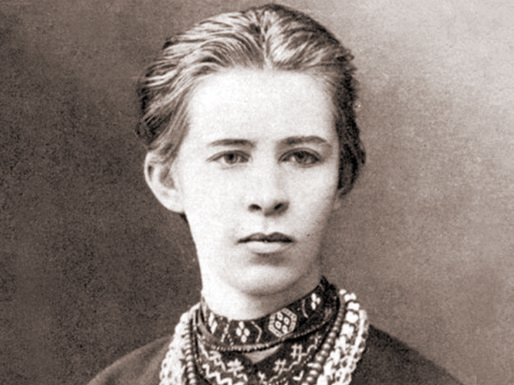
Lesia Ukrainka (Larysa Kosach) is one of the most prominent figures in Ukrainian literature. Her work has become a symbol of strength of spirit, intellect, and the struggle for national culture. Although the writer was born in Vollyn her life and work were connected with various cities in Ukraine, including Poltava. Her mother, Olena Pchilka (Olga Kosach), was born in 1849 in the town of Hadiach, Poltava Province, into the family of a poor landowner, nobleman Petro Dragomanov. Lesia also spent her childhood on the family estate of Zelenyi Hai in Poltava Province.
Lesia Ukrainka visited Poltava many times. At that time, our city was one of the centres of Ukrainian national culture. Famous writers, actors and public figures worked here. The city became an important centre for the spread of the Ukrainian language in literature and theatre. In particular, at the end of the summer of 1903, a significant public and cultural event took place in Poltava – the opening of a monument to the first poet of new Ukrainian literature, Ivan Kotliarevskyi. Lesia Ukrainka and her mother took part in this event, where they met many Ukrainian writers and cultural figures. A group photo taken on the third day of the holiday by the famous Poltava photographer Joseph Khmelevskyi remains as a memento of this meeting. This was her longest visit to Poltava. During the holidays, Lesia Ukrainka and Olena Pchilka stayed at the house of Poltava lawyer Mykola Dmitriev (now 3 Constitution Street) and attended the celebrations for the opening of the monument at the Educational House named after M.Gogol. There is another memorable building in Poltava – the European Hotel, where all the delegates, including Lesia Ukrainka, stayed or took part in festive dinners.
There is no doubt that during those festive days Lesia Ukrainka visited Ivan Kotliarevskyi's home, where the Ivan Kotliarevskyi Museum-Estate is now located. After the celebrations on 30 August, Lesia Ukrainka, together with Mykhailo Kotsiubinskyi, Mykhailo Starytskyi, Olena Pchilka, Volodymyr Samiilienko, Vasyl Stefanyk, Hnat Khotkevych, and Khrystyna Alchevska visited Panas Myrnyi in his cosy house in Kobyshchany, where a private meeting of a limited circle of attendees took place. Today, the Panas Myrnyi Literary and Memorial Museum in Poltava houses an original museum exhibit: an antique piano that Lesia Ukrainka played, demonstrating her masterful skills on the instrument. And on 31 August, the city hosted a luxurious dinner for its guests at the «Mongolia» restaurant on Malo Petrovska Street (now 25 Gogol Street). Panas Myrnyi compiled the «Menu for the eternal memory of I.Kotliarevskyi». He took all the names of the dishes from Ivan Kotliarevskyi's «Aeneid».
Although Poltava was not Lesia Ukrainka's main place of residence, the city became part of the broader cultural map of the writer's life. Through acquaintances, literary contacts and cultural events, Poltava was one of the Ukrainian cities where modern Ukrainian literature was formed. In December 1905, the first Ukrainian democratic magazine in the Dniper Ukraine, «Ridnyi Krai», was founded in Poltava. From the time of its appearance until its closure in 1907, Lesia Ukrainka was one of its active contributors.
Lesia Ukrainka lived a bright and eventful life, full of creativity, struggle and service to Ukrainian culture. She died on 1 August 1913 in the Georgian city of Surami from bone tuberculosis. She buried in Kyiv at the Baikove Cemetery.
Poltava bid farewell to Ukraine's illustrious daughter with the voice of Panas Rudchenko. In August 1913, Panas Myrnyi wrote to the editorial office of the newspaper «Rada»: «I add my old man's tears to the burning grief and bitter sorrow. Perhaps it, shed over the unexpectedly opened coffin of Lesia Ukrainka, will merge with others and at least a little ease the pain of all who knew our outstanding writer and great citizen, helping them to endure the great loss of their native land. May the earth lie lightly on her body, worn out by illness, and may the inspired works that the deceased has given us teach our descendants the boundless love for their native land that beat in her passionate heart during her lifetime!» Later, Panas Myrnyi's son recounted how lovingly and respectfully the name of Lesia Ukrainka was spoken in the family. Mykhailo Rudchenko was often asked what Panas Myrnyi said at home about Lesia Ukrainka. The writer's son asked his mother, Oleksandra, about this. Panas Myrnyi's widow replied: ‘She was simply our Lesia to our family. Her difficult life was very close to us.’
Today, Lesia Ukrainka's name is honoured in Poltava in the names of streets, educational institutions and cultural events. Her work continues to be studied in schools and universities, and the writer remains a symbol of the power of the Ukrainian word.
Lesia Ukrainka belongs to all of Ukraine, but every city connected with her life or creative circle adds new insights into the understanding of this outstanding figure. Poltava is one such city.
 1871-1913
-
-
